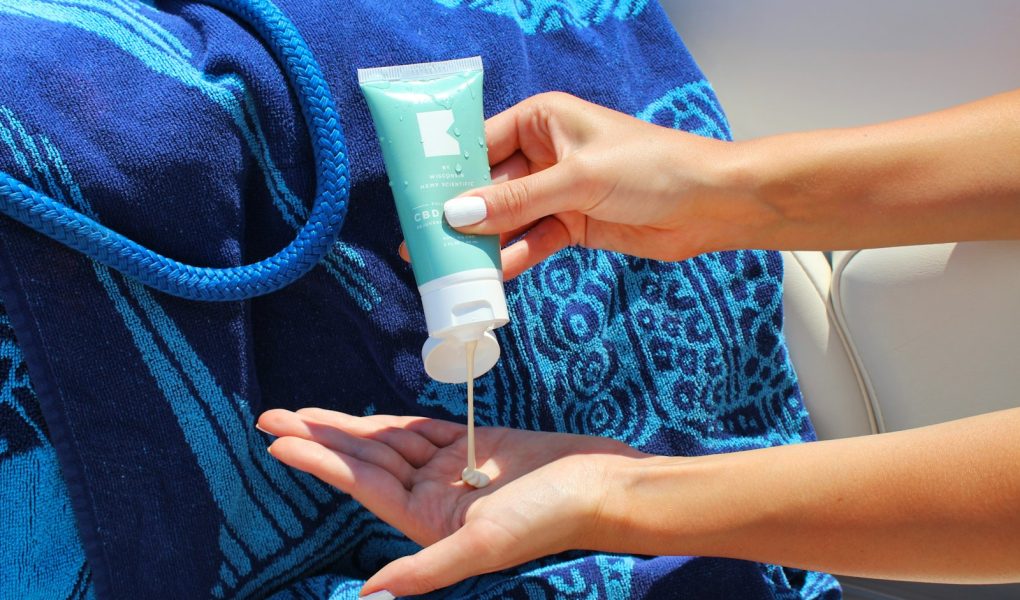
Most people use less sunscreen than they need. A few simple habits make it much more effective.
The gist
- The American Academy of Dermatology recommends a broad-spectrum, water-resistant sunscreen with SPF 30 or higher.
- Most adults need about 1 ounce, enough to fill a shot glass, to cover the body.
- Apply it before going outside, and reapply every two hours and immediately after swimming or sweating.
- Use at least a teaspoon on your face, and a lip balm with SPF 30 or higher.
Sunscreen is one of the simplest ways to protect your skin, but it only works well if you use enough and reapply it.
What to look for on the label
| Label | What it means |
|---|---|
| Broad-spectrum | Protects against both UVA and UVB rays |
| SPF 30 or higher | The level of protection the AAD recommends |
| Water-resistant | Stays effective for a set time, 40 or 80 minutes, while swimming or sweating |
How much to use
According to the American Academy of Dermatology (AAD), most adults need about 1 ounce of sunscreen, roughly enough to fill a shot glass, to cover the body. For your face, use at least a teaspoon. Don’t forget easy-to-miss spots: your ears, the back of your neck, the tops of your feet and your scalp if your hair is thinning.
When to apply and reapply
- Apply sunscreen before you go outside. It takes about 15 minutes to absorb and start protecting you.
- Reapply every two hours.
- Reapply immediately after swimming or sweating, even if the sunscreen is water-resistant.
Beauty tip
Keep a small sunscreen in your bag or car so you can reapply during the day. For your lips, use a lip balm with SPF 30 or higher.
Sunscreen is one part of sun protection
The AAD also recommends seeking shade, especially between 10 a.m. and 2 p.m., when the sun’s rays are strongest, and wearing protective clothing, a wide-brimmed hat and sunglasses with UV protection.
Worth remembering
If you have a skin condition, react to a sunscreen, or are choosing protection for a baby under 6 months old, ask a dermatologist or pediatrician for advice. See a dermatologist about any new or changing spots on your skin.
Make it a habit
Pair sunscreen with something you already do every morning, such as brushing your teeth, and keep it next to your moisturizer. It’s the last step of a simple skincare routine.
You asked
Do I need sunscreen on cloudy days?
Yes. The sun’s UV rays can reach your skin through clouds, so daily protection is a good habit all year.
Is a higher SPF always better?
A higher SPF filters slightly more UVB rays, but no sunscreen blocks them all. Using enough and reapplying matter more than a very high number.
Does makeup with SPF count?
It can help, but most people don’t apply enough makeup to get the SPF on the label. Many dermatologists suggest wearing sunscreen underneath.
This article is general information, not medical advice. For skin, hair or nail problems that worry you, or before starting a new treatment if you’re pregnant, breastfeeding or have a health condition, talk to a board-certified dermatologist or your doctor.